
Increase perimenopause and menopause screening in your practice


A menopause health assessment provides an opportunity to discuss symptoms, health concerns, lifestyle factors and overall wellbeing during the menopause transition.
The assessment can help identify health needs early, provide education and support, and guide appropriate follow-up, referrals and ongoing care.
For more information about the health assessment refer to MBS Item 695 | Medicare Benefits Schedule.
QI activity overview
What is the aim of this QI activity?
increase screening for perimenopause and menopause within your practice.
increase the number of menopause health assessments completed – complete 2 in the next 3 months.
improve clinician awareness and confidence in identifying perimenopause and menopause symptoms.
By participating in this quality improvement activity, your practice will support consistent, evidence-based care and improve patient outcomes during the menopause transition.
What will I need to do?
form a quality improvement team - use this Team roles & responsibilities worksheet.
review the SPA resources and screening tools and upskill clinicians (refer to resource section of activity).
order resources and promote awareness (optional).
display posters and brochures in waiting rooms.
promote menopause awareness through practice social media channels.
understand the Medicare item number criteria: Item 695 | Medicare Benefits Schedule.
read the PDSA example supplied in this activity.
To complete the health assessments, refer to Start Your Activity section.
How will I complete this activity?
use Primary Sense to identify eligible patients, contact patients, have nurses initiate discussions and wellbeing checks.
complete menopause health assessments.
review progress during clinical team meetings.
Where do I document my results?
manual recording of baseline and final assessment numbers.
MBS billing reports.
Reflect on your efforts and consider future activities
review outcomes.
identify lessons learned and sustainability opportunities.
Who can I contact for support?
For support with this activity please contact the General Practice Quality Improvement team on 38647540 or email [email protected].
Step 1: Start your activity
1. Identify patients eligible for perimenopause and menopause health assessments.
On Primary Sense, click on Health Assessment, find the perimenopause/menopause report.
Note: as Primary Sense data is based on information held in your clinical software. It is important to always confirm patients’ eligibility via PRODA. To learn how to do this, please refer to Services Australia website.
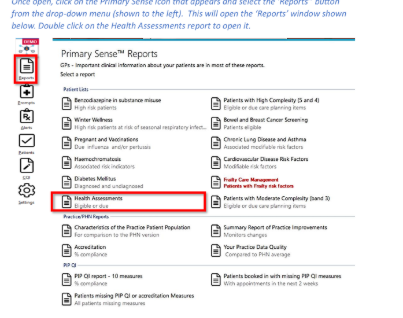
Identify 2 patients eligible for the health assessment. Discuss with the patient's regular GP before contacting.
2. Invite identified patients for a health assessment
determine your contact method for eligible patients e.g. SMS, phone, email, or letter. Consider a follow up method for non-respondents.
review the list of eligible patients with the GP(s) and identify those suitable for the QI activity.
It may take a few different approaches to find the method that works for your practice and your patients. Be ready to change and adjust your approach based on the responses and feedback you received from your patients and team members.
Guidance for sending SMS
You may prepare and save Primary Sense report in CSV format (see screenshot below), which will create a patient recall list for use with HotDoc or other compatible applications.
For instructions on sending bulk SMS messages, please contact your SMS service provider.
3. Read the MBS guidelines-Item 695 | Medicare Benefits Schedule.
4. Complete health assessments for eligible patients in your practice.
Complete menopause health assessments using the relevant templates available within your clinical software.
MedicalDirector -Summary Templates.
Best Practices-Menopause Health Assessment MBS Items.
Create a new document from a template- click on supplied.
Bill MBS item number after HA completed.
Step 2: Track your results
What data will be used to track improvement?
Primary Sense - HA reports.
team meeting discussions and feedback.
use MBS billing reports within your software to track monthly MBS Item 695 Health Assessment activity and monitor progress of the QI project.
For Best Practice users
1) From the BP Premier home screen, select Management > Reports
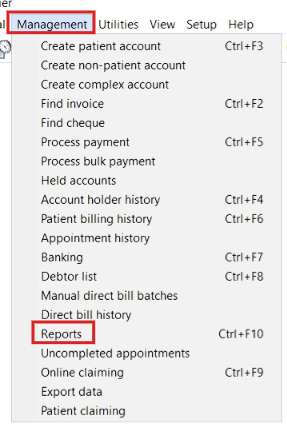
2) Select “Payments- by Account Type (group by item) including related services”
3) Choose the report parameters by selecting the date, locations, and providers. Go to “Billing” and select 695 for MBS items. Click on View Report.
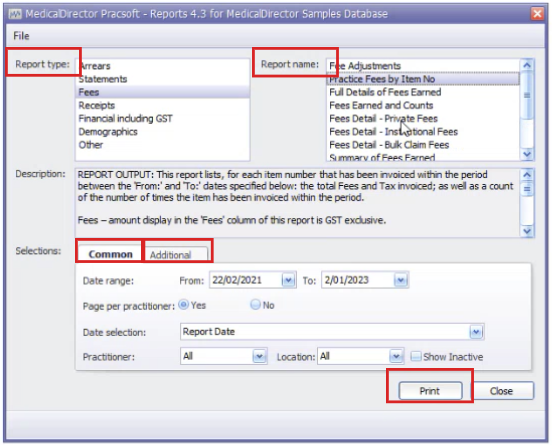
For MedicalDirector users
1) In Pracsoft, go to Reports > All Reports
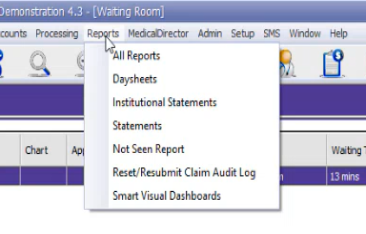
2) Under report type, choose Fees.
3) For report name choose Practice Feeds by Item No.
4) In the Common tab, select the reporting date range.
5) Go to Additional tab, and type in the item numbers.
6) Click Print to display the report on screen.
Step 3: Complete and reflect on your activity
As a team, reflect on how the activity went:
what worked well?
did you experience any barriers or challenges?
if yes, how did you overcome them?
what changes could be implemented in your practice to better support perimenopause and menopause health assessments?
Celebrate your achievements as a team!
Share Your Results
Share your findings with your practice team, Brisbane South PHN and other relevant clinical networks and stakeholders, where appropriate.
Next Steps
review results using Primary Sense and MBS billing data.
continue staff education and professional development.
embed menopause health assessments into routine practice workflows.
Example of completed QI activity
Resources to support with your activity
Clinical resources or guidelines
Professional development courses and resources are available for health professionals seeking to increase their understanding of the menopause transition.
The Department of Health, Disability and Ageing also has several resources, including:
dedicated webpage for health professionals with links to best practice guides, and information on professional development, training, health assessments, and symptom management.
poster for display in practices to encourage patients to discuss potential symptoms during consultations.
brochure about menopause and perimenopause, including common symptoms, and management and support options available.
symptom checklist that patients can bring to appointments to help identify symptoms and guide discussions with their health professional.
The following courses and resources are available for health professionals:
Managing menopause in general practice
CPD-accredited training from Jean Hailes for Women’s Health.
Understanding menopause for nurses and midwives
Training from Jean Hailes for Women’s Health.
Tools and resources
We appreciate your feedback!
Our Quality Improvement Team works with general practices to provide practical advice and resources to help plan, implement, and review your QI activities. Your feedback helps our team to provide the best possible support for your practice.
Contact General Practice Quality Improvement
Phone: 07 3864 7540