
Improve the height and weight recordings of our active patients




Currently in the Brisbane south region, using most recent available data, 30.9% of patients have an up-to-date height and weight record (AIHM). The most recently recorded national average for QIM03a was 28.6% (AIHM). BMI is among the lowest nationally recorded PIP QI measures, in contrast to QIM02a, the proportion of patients over 15 with a documented smoking status, which stands at 69.7% (AIHM). This indicates a significant need for improvements in this space.
Recording BMI of an individual will allow for:
An increased opportunity for clinicians to discuss weight management with their patients.
Increased screening for health conditions which enable early detection.
Acknowledgement of Sponsorship: We gratefully acknowledge the sponsorship support provided by Eli Lilly Australia Pty Ltd for the BMI Project. The project content, activities and outputs have been developed independently, and sponsorship does not imply endorsement of any specific product, service or clinical approach.
QI activity overview
What is the aim of this QI activity?
improve the BMI recording rate of active patients in our practice.
record height and weight of 100 active patients who are aged 15 years and over in a 4-week period.
What will I need to do?
identify your QI team (e.g. PM, PN, GP).
record the height and weight of your active patients in the correct fields of patient file in your clinical information software (CIS) (Best Practice or MedicalDirector).
How will I complete this activity?
use Primary Sense to identify patients missing BMI (refer to Step 1 - Start your activity section).
record height and weight for BMI calculation in your CIS.
date of height and weight recorded.
Where do I document my results?
Model for Improvement/PDSA template.
Who can I contact for support?
For support with this activity please contact the General Practice Quality Improvement team on 38647540 or email [email protected].
Step 1: Start your activity
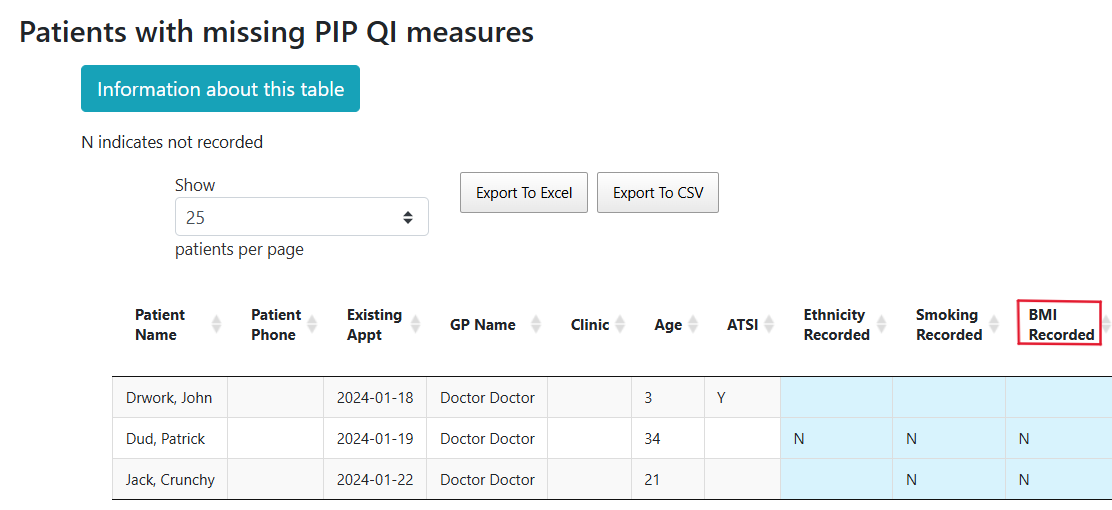
1. Identify active patients with missing BMI record.
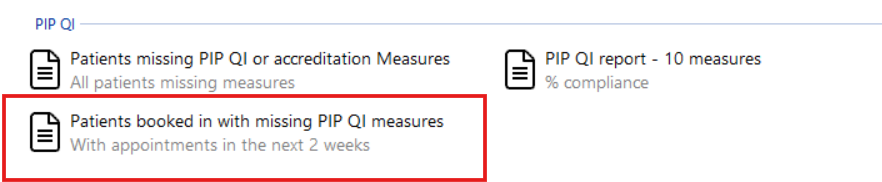
Using Primary Sense, identify 100 patients whose BMI is not recorded. To do this, we suggest reviewing the “patients booked in with missing PIP QI measures” report at least twice a week until 100 patient files have been updated with BMI records. This is because your appointment book changes on daily basis.
2. Flag patients who require BMI records updated.
Discuss as a team how and where practice team members can flag patients’ that require their BMI updating, e.g. in the appointment book. Use your agreed method to flag patients identified in Step 1.
3. Display the lifestyle factors poster in your practice to inform your patients that you are updating their records.
4. Update patient’s height and weight when attending the appointment.
With patient flagging process in place (step 2), team members are to measure and update patient’s height and weight in the correct fields of patient file.
For Best Practice users
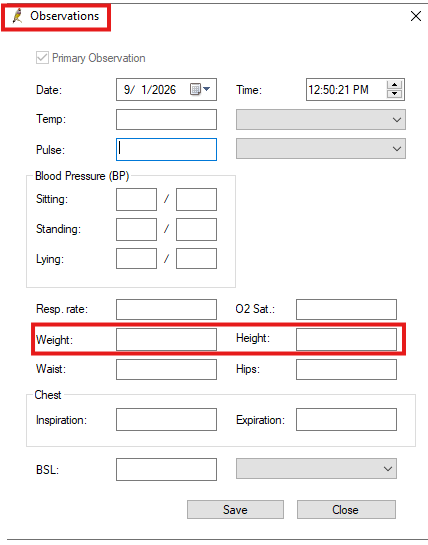
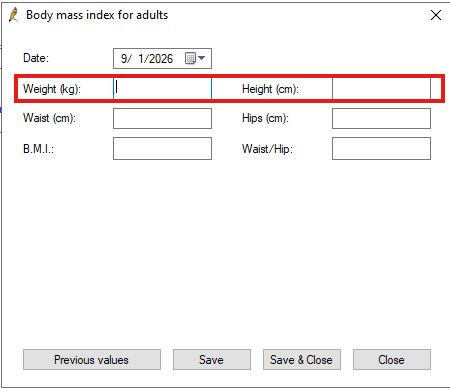
Height and weight can be entered via two options by clicking the BMI icon in the toolbar or selecting Observations > Add in the patient file.
For MedicalDirector users
Height and weight are entered via Progress Notes and various Tools. To view the measurements, select Clinical > Measurements in patient files.
Step 2: Track your results
Manually Document the progress of your activity in the target poster or using a basic tally sheet.
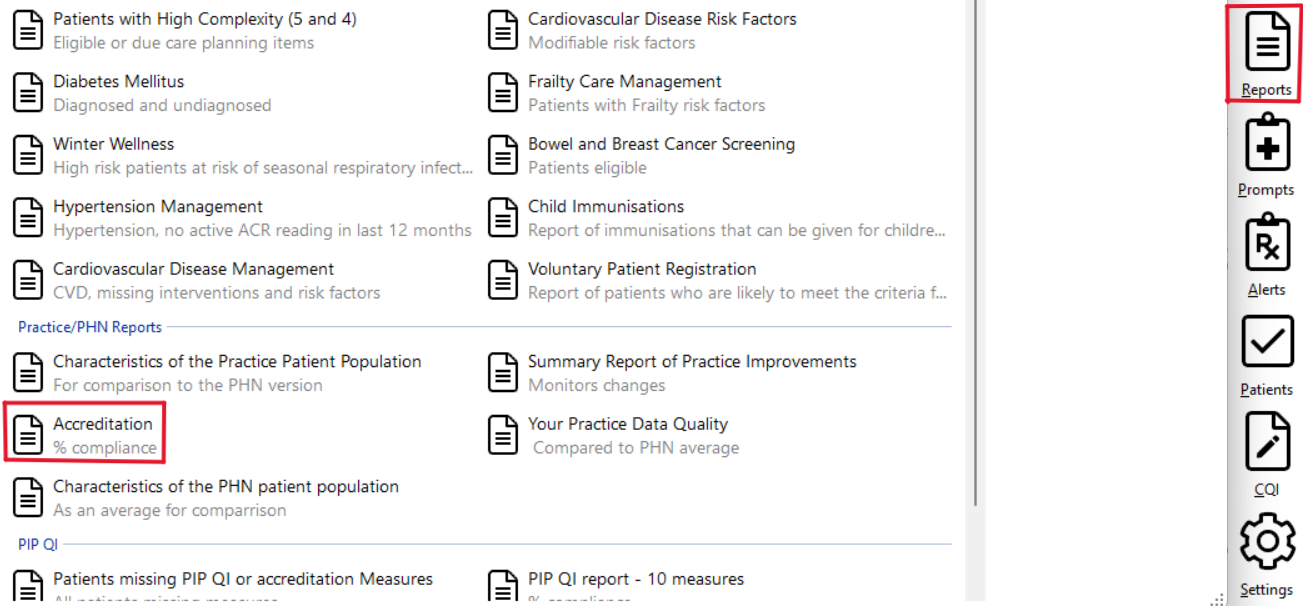
For ongoing monitoring, practices can use “accreditation % compliance” report in Primary Sense or Practice Report Dashboard to track your proportion of patients with BMI recorded.
Step 3: Complete and reflect on your activity
How did you go?
As a team, reflect on how the activity went.
what are the challenges/barriers?
what worked well?
are there any changes that you could implement to support the recording of BMI of your patients in your practice.
Share your results
Share your results with your team and Brisbane South PHN.
Next steps
Consider how you can use patient BMI to tailor the interventions and screening programs provided to your patients.
Example of completed QI activity
Resources to support with your activity
Tools and resources
Model for Improvement/PDSA template
QI Summary register
Roles and responsibility – team activity worksheet
Brisbane South HealthPathways
Updating Lifestyle factors poster
Weight classification chart
Lancet infographic - Clinical Obesity
Australian Obesity Management Algorithm
Body mass index (BMI) and waist measurement
PIP QI Incentive: User Guide Practices – refer to Section 3.3 Proportion of patients with a weight classification
RACGP Standards for general practices 5th edition (refer to Criterion C7.1 - Content of patient health records
We appreciate your feedback!
Our Quality Improvement Team works with general practices to provide practical advice and resources to help plan, implement, and review your QI activities. Your feedback helps our team to provide the best possible support for your practice.
Contact General Practice Quality Improvement
Phone: 07 3864 7540